Do you really need surgery for an ACL tear? Not necessarily. Whether surgery is required depends on the severity of your tear (partial or complete), the stability of your knee during daily life and sport, and your personal activity goals. Many patients with partial ACL tears — and even some with complete tears who avoid high-demand pivoting sports — achieve full recovery through structured physiotherapy and rehabilitation alone, without ever going under the knife. Surgery is not automatic, and a sports medicine specialist will evaluate several individual factors before making a recommendation.
Key Fact: A landmark randomized trial found that young active adults treated with structured rehabilitation first had comparable five-year outcomes to those who had early ACL reconstruction surgery — challenging the assumption that immediate surgery is always the better path.
What Exactly Is the ACL, and Why Does It Tear?
The Anterior Cruciate Ligament (ACL) is one of the four major ligaments inside your knee, running diagonally through the joint to connect your thigh bone (femur) to your shin bone (tibia). Its primary job is to control rotational stability — preventing the tibia from sliding forward relative to the femur during sudden changes of direction, jumps, or hard stops.
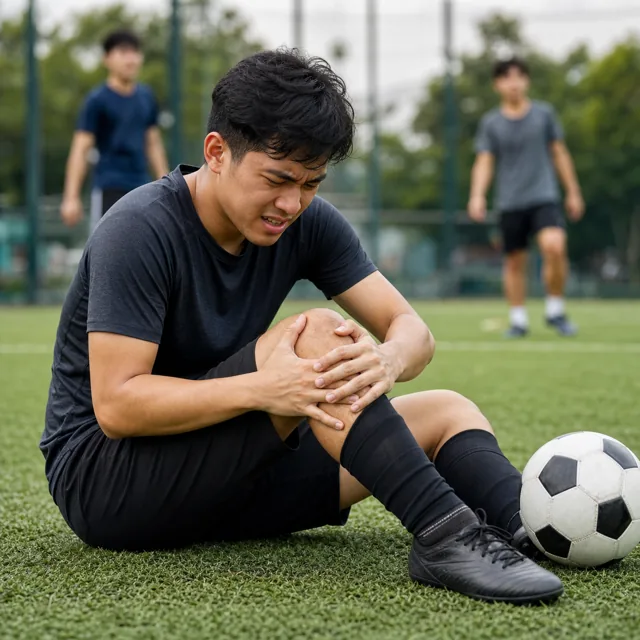
In Malaysia, ACL tears are most commonly seen in recreational football (futsal), badminton, basketball, and rugby players. The injury typically happens without contact: a sudden pivot, a mistimed landing, or a sharp deceleration. The hallmark symptom is a loud audible "pop" felt deep inside the knee, followed by immediate swelling and the sensation that the knee has "given way."
Understanding the Grade of Your Tear
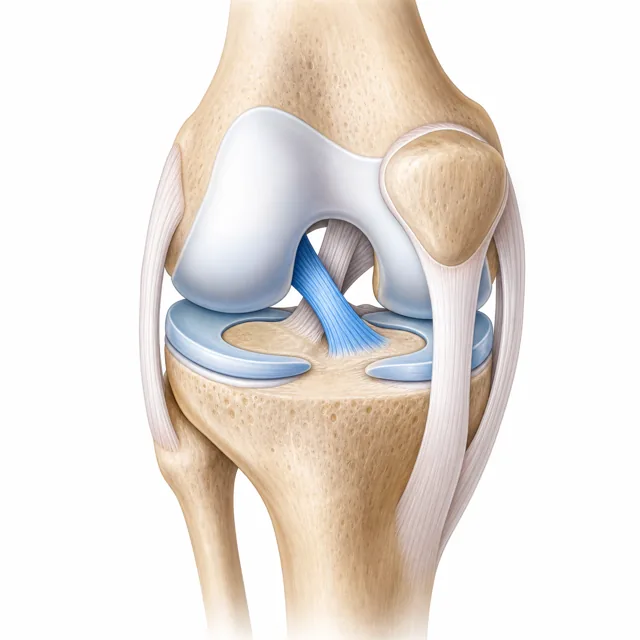
Not all ACL injuries are created equal. Doctors classify them into three grades, and this classification is the single most important factor in deciding your treatment path:
- Grade 1 (Sprain): The ligament is stretched but structurally intact. The knee remains stable. These almost always heal conservatively.
- Grade 2 (Partial Tear): Some fibers are torn, creating looseness, but a portion of the ligament still functions. Partial tears represent 10–27% of ACL injuries, and many are managed without surgery.
- Grade 3 (Complete Rupture): The ligament is fully torn into two pieces. Surgery is often discussed — but as you will see, it is still not a foregone conclusion for every patient.
Diagnosis involves a clinical physical examination (most notably the Lachman Test and the Pivot Shift Test) combined with an MRI scan, which can confirm the grade and check for accompanying injuries to the meniscus or collateral ligaments.
The Critical Question: Are You a "Coper"?
Sports medicine uses a concept called the "coper vs. non-coper" classification to predict who can succeed without surgery. A coper is a patient who can dynamically stabilize their knee — even without a functioning ACL — by relying on muscle strength, coordination, and neuromuscular control.
Research suggests that patients classified as copers can successfully return to sport without reconstruction. Key traits that indicate you may be a coper include:
- No episodes of the knee "giving way" in daily activities after the initial injury.
- Strong quadriceps and hamstring strength (typically assessed at least six weeks post-injury).
- Negative or low-grade findings on instability tests during a physical exam.
- Participation in lower-demand or straight-line sports, rather than high-pivot sports like football or badminton.
- No combined injuries to the meniscus or other ligaments in the same knee.
Conservative Rehab May Be Enough If...
- Your tear is partial (Grade 1 or 2)
- Your knee feels stable in daily life
- You play recreational or low-pivot sports
- No meniscus or multi-ligament damage
- You are willing to commit to physiotherapy
Surgery Is More Likely Recommended If...
- Your knee gives way frequently
- You play high-demand cutting/pivoting sports
- There is combined meniscus or ligament damage
- You are a competitive or professional athlete
- Conservative rehab has failed to restore stability
What Does Non-Surgical ACL Treatment Look Like?
Choosing the conservative route is not the passive option — it demands just as much commitment as post-surgical rehabilitation. A structured non-operative programme typically unfolds in three phases:
Phase 1: Acute Management (Weeks 1–3)
The immediate goal is to control swelling, reduce pain, and restore full range of motion. Your doctor may recommend the PRICE protocol (Protection, Rest, Ice, Compression, Elevation), alongside anti-inflammatory medication. In some cases, an aspiration procedure may be performed if significant fluid has accumulated in the joint.
Phase 2: Neuromuscular Strengthening (Weeks 4–16)
This is the heart of conservative ACL rehabilitation. A sports physiotherapist designs a progressive programme to rebuild the quadriceps and hamstrings — the dynamic "backup stabilizers" of the knee — and to retrain neuromuscular control. Exercises progress from controlled closed-chain movements to sport-specific drills. Proprioception training (balance boards, agility ladders) is essential to compensate for the lost sensory feedback of the torn ligament.
Phase 3: Return-to-Sport Testing (Month 4 onwards)
Before you return to your sport, a sports medicine physician will conduct objective strength and functional tests. These include hop tests, isokinetic dynamometry, and movement analysis to confirm that your knee is genuinely stable under load — not just comfortable at rest. Only passing these tests gives clearance to return to full activity.
When ACL Surgery IS the Right Answer
Surgery should not be feared — when it is indicated, ACL reconstruction delivers excellent outcomes. The procedure is typically a minimally invasive arthroscopic surgery where the torn ligament is replaced with a graft (usually from your own hamstring or patellar tendon). Here are the scenarios where your sports medicine doctor will lean towards recommending it:
- Persistent instability: Your knee continues to give way despite several weeks of dedicated physiotherapy.
- Combined knee injuries: The ACL tear is accompanied by a meniscus tear, collateral ligament injury, or cartilage damage — which generally produce better outcomes with surgical stabilization.
- High-demand athletic goals: You compete in football, basketball, badminton, or any sport that demands repeated cutting, pivoting, or jumping, and you wish to return to that level.
- Young active patients: Younger patients with high physical demands and a long sporting career ahead of them often benefit most from reconstruction in terms of long-term knee health.
Post-surgical recovery typically takes 9 to 12 months before a full return to competitive sport, making the initial rehabilitation phase — even with surgery — equally important.
The Bottom Line: One Injury, Many Paths
An ACL tear is not a one-size-fits-all diagnosis, and the treatment should not be either. The evidence is clear: for the right patient — particularly those with partial tears, stable knees, and lower physical demands — structured rehabilitation can achieve outcomes comparable to surgery. For others, particularly competitive athletes or those with combined injuries, reconstruction is the more reliable long-term solution.
The most important first step is not searching for a surgeon or a physiotherapist — it is getting a thorough assessment from a sports medicine specialist who can objectively classify your injury grade, assess your knee stability, and design a treatment plan around your life and goals. In many cases, that conversation alone will save you from an operation you never needed.