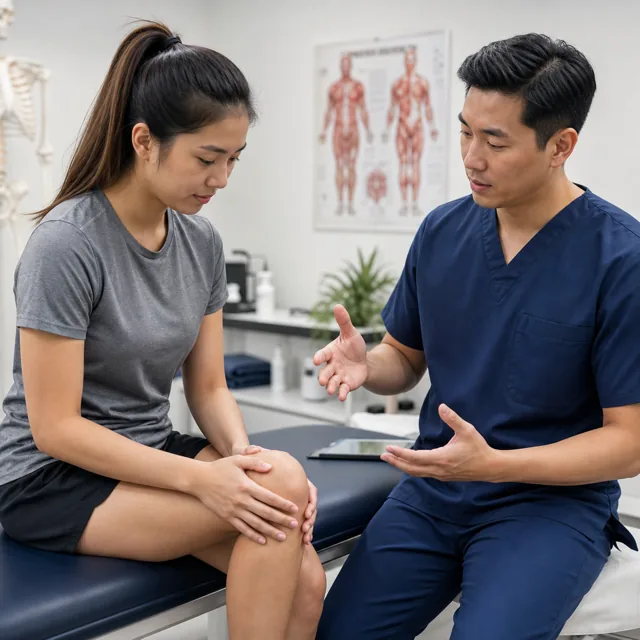
Does a sports injury need surgery? In most cases, the honest answer is no — not immediately, and often not at all. The majority of sports injuries, including many ligament sprains, muscle tears, and joint problems, respond well to structured physiotherapy and rehabilitation. Surgery is typically only necessary when there is a complete structural rupture causing ongoing instability, a fracture that cannot heal in alignment without fixation, or when conservative treatment has been genuinely tried and failed. If you've just been injured and you're scared about what comes next, the most important thing to know is this: see a sports medicine doctor first, before assuming the worst.
The Most Important Thing to Know Right Now
You do not need to decide anything immediately. Even if your injury is serious, there is almost never a surgical emergency in sports medicine (outside of fractures with nerve or blood vessel involvement). You have time to get a proper assessment, understand your options, and make a calm, informed decision.
Quick Answer: When Is Surgery Actually Necessary?
Surgery for a sports injury is typically recommended in one of three scenarios. Understanding these helps cut through the confusion you may have read about online:
- Complete structural failure: A tendon or ligament has fully ruptured and the body cannot restore function without surgical repair (e.g., complete Achilles tendon rupture, quadriceps tendon rupture).
- Structural instability that limits daily life: The injured joint is so unstable that it gives way repeatedly during normal activities — not just sport — and rehabilitation has not improved this.
- Fractures requiring realignment: A bone has broken in a way that won't heal in the correct position without surgical fixation. Displaced fractures near joints often fall into this category.
- Failed conservative treatment: You have completed a proper, supervised rehabilitation programme, and pain or dysfunction persists at a level that prevents you from living the life you want.
If your injury does not clearly fit one of these categories, the strong likelihood is that rehabilitation is the right first path.
The Honest Decision Framework: 5 Questions to Ask
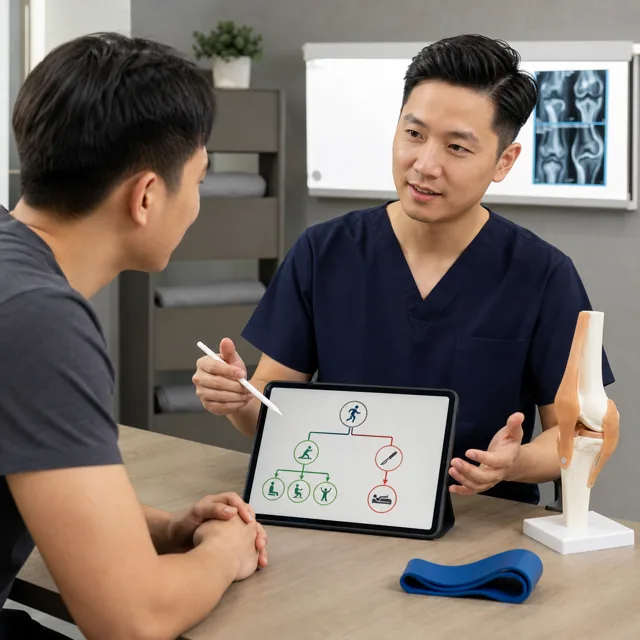
When patients arrive at our clinic after an injury, they often arrive with one of two fears: that they definitely need surgery, or that they're being told they don't need it when they actually do. A good sports medicine assessment answers both. Here is the decision framework we use:
1. Is there a complete structural rupture?
Partial tears — of ligaments, cartilage, or muscle — almost always heal with the right rehabilitation. Complete ruptures are more complex, but even then, surgery is not automatic. A complete ACL tear, for example, does not always require reconstruction. Research shows that up to 61% of patients can achieve good outcomes through structured rehabilitation alone, particularly if they are not returning to high-demand pivot sports. The key question is: does the tear cause the joint to be unstable during everyday activities?
2. Is the joint functionally unstable?
Instability — not just pain — is the main indicator that surgical stabilisation may be necessary. If your knee, ankle, or shoulder buckles or gives way during walking, climbing stairs, or light activity after a fair trial of rehabilitation, that is a meaningful signal. Pain alone, even severe pain, is not a reliable indicator that surgery is needed.
3. Have you actually tried rehabilitation?
Many patients are surprised to learn that they've never truly been through a complete rehabilitation programme. A few weeks of rest and some basic exercises is not the same as a structured, supervised physiotherapy programme. Before concluding that surgery is the only option, it is worth completing a full rehabilitation course under professional guidance. In sports medicine, we consider rehabilitation to have "failed" only after a consistent, progressive programme has been genuinely attempted.
4. What are your goals and activity demands?
A professional athlete returning to competitive sport has different needs from a recreational runner who wants to stay fit. Surgical decisions are highly personalised. A 19-year-old footballer with a complete ACL tear who aims to return to competitive play may genuinely benefit from reconstruction. A 52-year-old who enjoys weekend cycling with the same tear may not need surgery at all. Your goals matter in this decision.
5. Is imaging actually showing what you think it's showing?
MRI reports can be alarming to read. Words like "tear," "rupture," and "degeneration" appear frequently — but context is everything. Many people walk around with MRI findings that would look dramatic on paper but cause no symptoms whatsoever. An experienced sports medicine doctor helps you understand what your imaging means for you, not just in isolation.
Injuries That Often Do NOT Need Surgery
These are the injuries our patients most commonly arrive worried about, assuming surgery is inevitable:
- Partial ACL tears: Frequently managed very successfully with rehabilitation, especially in recreational athletes.
- Meniscus tears: Degenerative meniscus tears (common in adults over 35) have strong evidence that physiotherapy produces equivalent outcomes to surgery in most patients.
- Rotator cuff partial tears: Respond well to targeted strengthening and load management in the majority of cases.
- Ankle ligament sprains (even Grade 3): Most complete ankle ligament tears heal reliably without surgery with proper rehabilitation and bracing.
- Stress fractures: Almost always managed with rest and progressive loading — not surgery.
- Runner's knee and tendinopathies: These are overuse conditions, not structural failures. They are always treated first with load management and physiotherapy.
Injuries That More Commonly Require Surgery
To be balanced and honest, some injuries do have a high likelihood of requiring surgical intervention for full recovery:
- Complete Achilles tendon rupture: Surgical repair is often recommended, especially in active individuals, due to the risk of re-rupture and compromised strength with conservative management alone.
- Displaced fractures near joints: Breaks that affect joint surfaces or are significantly out of alignment typically need surgical fixation to restore proper mechanics.
- Complete quadriceps or patellar tendon rupture: These are genuine structural emergencies requiring prompt surgical repair.
- Significant labral tears with instability: Shoulder or hip labral tears that cause true joint instability unresponsive to rehabilitation may require surgical repair.
- Multi-ligament knee injuries: Injuries involving multiple ligament structures often require surgical reconstruction to restore knee stability.
Even with the above, timing matters. In most cases, operating in the acute swollen phase is not ideal. A brief period of physiotherapy to reduce inflammation and restore range of motion before surgery often leads to better outcomes.
Why "See Us First" Is the Most Valuable Advice
The internet is full of contradictory information about sports injuries. You can find articles insisting surgery is the only real fix, and others claiming rehabilitation cures everything. The truth is more nuanced — and deeply individual. What determines the right path for you is:
- The specific nature and severity of your injury (diagnosed accurately, not just guessed).
- Your functional goals — what you want to be able to do, and at what level.
- Your overall health, age, and activity history.
- Whether conservative treatment has had a genuine trial.
A sports medicine consultation gives you all of this. You leave with a diagnosis, a plan, and a clear understanding of when — if ever — surgery becomes the right conversation. Most patients leave surprised by how much can be achieved without it.
When to Seek Urgent Assessment (Within 24–48 Hours)
While most sports injuries are not emergencies, come in promptly if you experience:
- Complete inability to bear weight or use the injured limb.
- Visible deformity or a limb that looks "wrong."
- Numbness, tingling, or loss of circulation below the injury site.
- A joint that has locked and cannot be moved at all.
- Severe, immediate swelling that appears within minutes of injury.
Conclusion: Surgery Is the Exception, Not the Default
If you've just been injured and you're reading this trying to figure out how bad it is — take a breath. The vast majority of sports injuries, even those that sound frightening, are treated successfully without an operation. Surgery is a tool, not a first resort. The right first step is always an accurate diagnosis from a sports medicine professional who takes the time to understand your injury, your goals, and your life. From there, most paths lead to rehabilitation — and most patients come out of it stronger than before the injury. Book a consultation. Get the facts. Then decide.