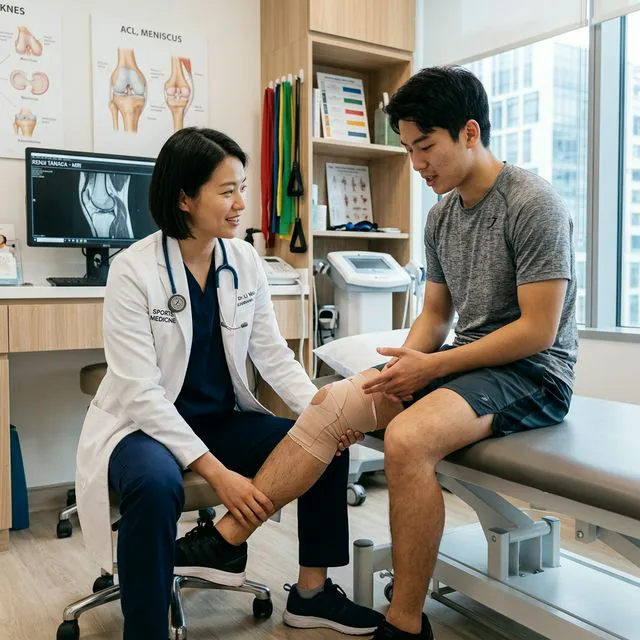
What happens at a sports medicine consultation? During a sports medicine consultation, a doctor will first evaluate your medical history and discuss the specific mechanism of your injury or pain. Next, they will perform a comprehensive physical and biomechanical examination to assess your joint stability, range of motion, and muscle strength. Depending on these findings, the doctor may perform or order diagnostic imaging, such as an X-ray, MRI, or point-of-care musculoskeletal ultrasound. Finally, they will collaborate with you to create a personalized, non-surgical treatment plan that may involve physical therapy, rest, orthotics, or targeted joint injections.
Quick Answer: The 4 Distinct Steps of Your Visit
A comprehensive sports medicine consultation typically unfolds in four main stages, seamlessly integrating modern diagnostic techniques into building a tailored recovery plan:
Step 1: The History
A detailed discussion about your injury, daily activities, and previous medical background.
Step 2: The Physical Exam
A mechanical assessment of your flexibility, strength, joint stability, and movement patterns.
Step 3: Diagnostic Imaging
Point-of-care ultrasound, X-rays, or MRI referrals to visually confirm structural issues.
Step 4: The Treatment Plan
A personalized, collaborative strategy, focusing heavily on non-surgical treatments and physical therapy.
A Closer Look at the Examination Process
1. The Detailed History Taking
Your visit begins with a conversation. A sports medicine doctor will want to know the precise mechanism of your injury. Did you hear a pop? Did swelling occur immediately or overnight? Which movements aggravate the pain? Furthermore, they will want to understand your larger health history and fitness habits. Providing clear insight into your regular training volume, preferred sports, and end goals — like finishing a marathon or just walking pain-free — is vital. This detailed history forms the bedrock of an accurate diagnosis.
2. The Biomechanical Physical Exam
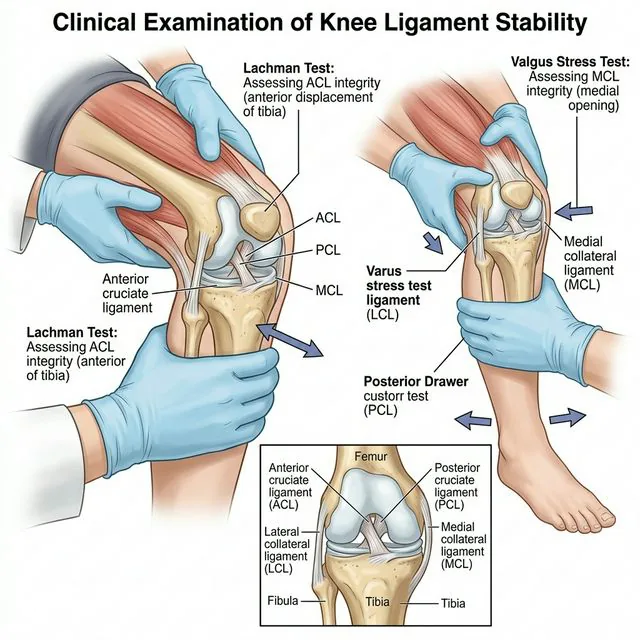
Depending on your injury, your doctor will check the opposite, uninjured side first to establish a baseline. You will undergo specific provocative tests where the doctor will gently manipulate the joint to identify which specific ligaments, tendons, or muscles are generating the pain. They will assess your functional range of motion (ROM), check for instability or laxity in the joints, look for visible swelling, and note any muscle atrophy.
Why Diagnostic Imaging is Important
Often, a physical examination alone provides enough information to begin treatment. However, in modern sports medicine, doctors heavily utilize point-of-care imaging to ensure diagnostic accuracy. Musculoskeletal ultrasound is increasingly used right in the consultation room to evaluate soft tissues — such as tendons and ligaments — dynamically as you move. X-rays are routinely performed to rule out fractures or severe bone-on-bone arthritis. For complex internal-joint injuries, like a suspected meniscus or deep cartilage tear, your doctor may refer you for an MRI scan.
Creating Your Personalized Treatment Plan
Once a diagnosis is reached, the doctor will sit down with you to outline the most effective recovery path. The vast majority of sports injuries are treated without surgery. Your plan may include:
- A structured timetable for rest and activity modification.
- A referral to specialized physiotherapy for targeted strengthening and rehabilitation.
- Recommendations for bracing or taping during physical activity.
- If appropriate, minimally invasive interventions like ultrasound-guided injections (e.g., corticosteroids or PRP) to alleviate inflammation and stimulate healing.
Most importantly, the consultation ends as a dialogue. The treatment plan is built collaboratively around your lifestyle, ensuring that you understand your recovery timeline and feel confident in the next steps.
Conclusion
A sports medicine consultation is far more than just receiving a diagnosis; it's about discovering exactly how your body moves and learning how to optimize its healing. By taking a thorough history, performing a biomechanical exam, and utilizing precise imaging, your doctor can empower you with a comprehensive recovery strategy. Your only job is to come prepared in comfortable clothing, ready to talk about your goals, and take the first confident step toward relief.